
If you’ve never bathed in a large pothole full of mud, mud that’s the consistency of slightly gritty vanilla custard without the delicious creamy flavour, you haven’t lived. It’s a strange experience, bobbing around in lukewarm sludge, feet up, lying back with arms outstretched watching large flatulent bubbles of natural methane gas break the surface around you. And it’s basically impossible to sink in the mud unless you -or a close family member- tie some large, heavy weights to your feet.
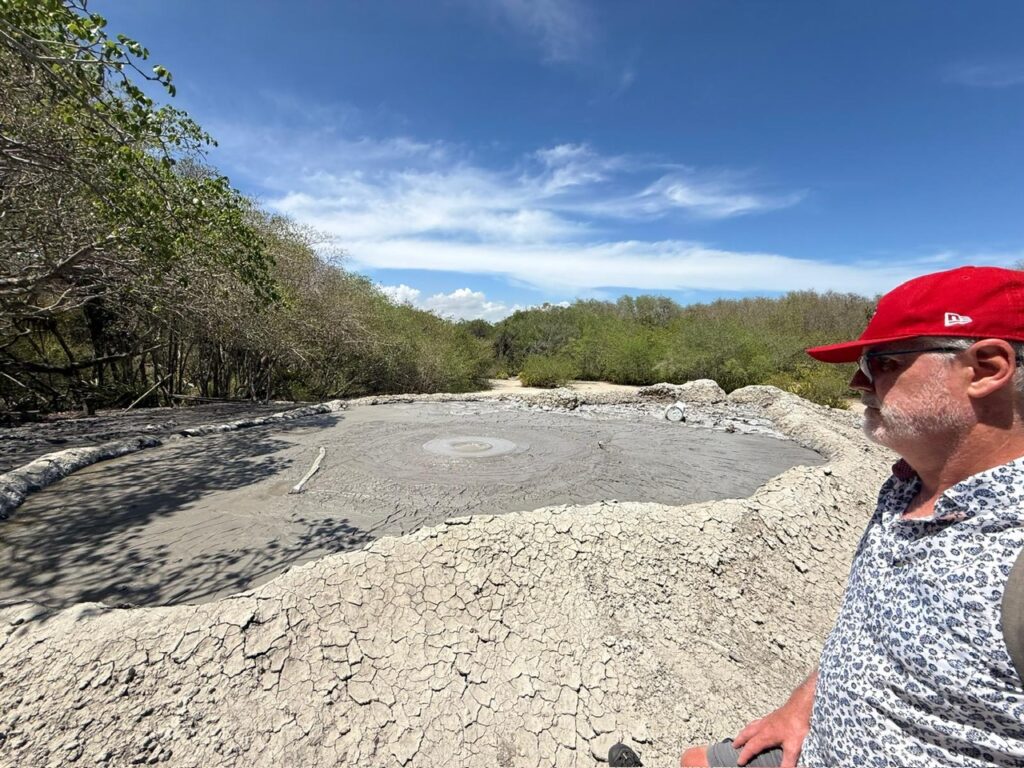
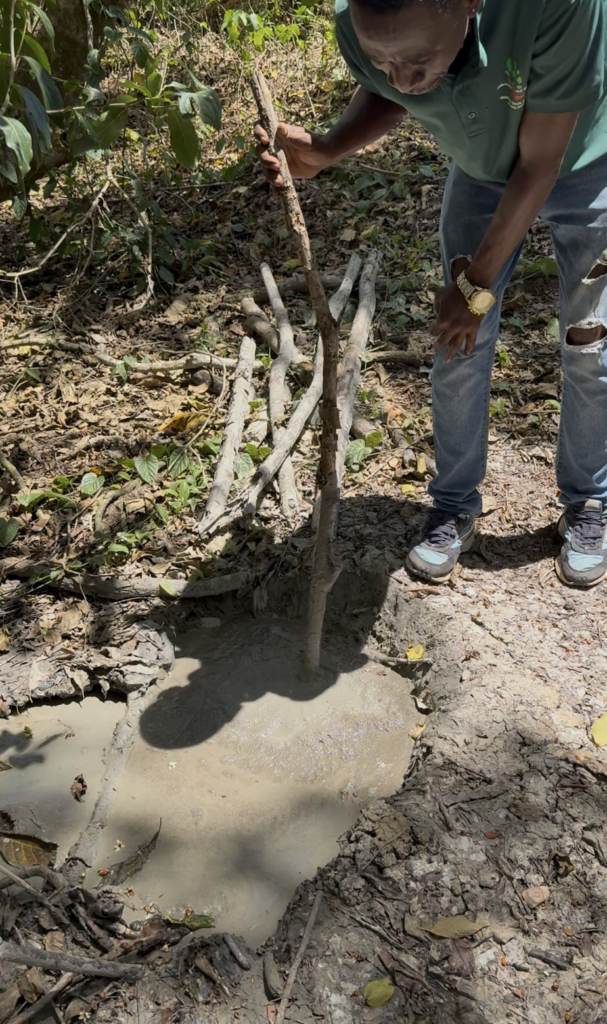
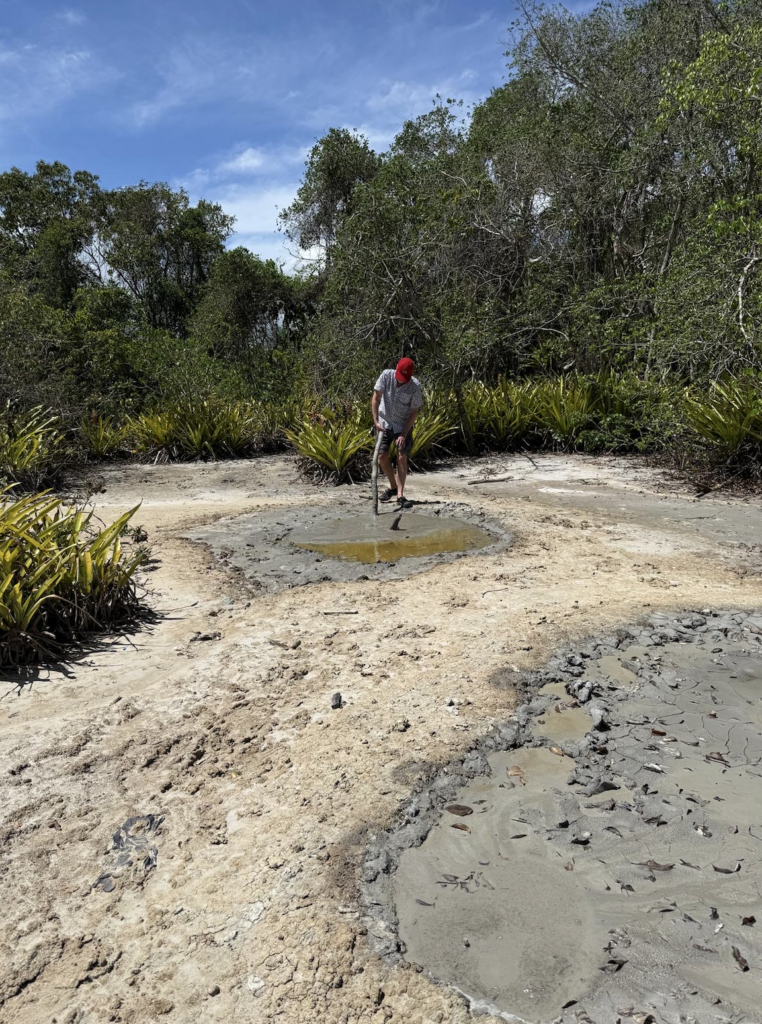
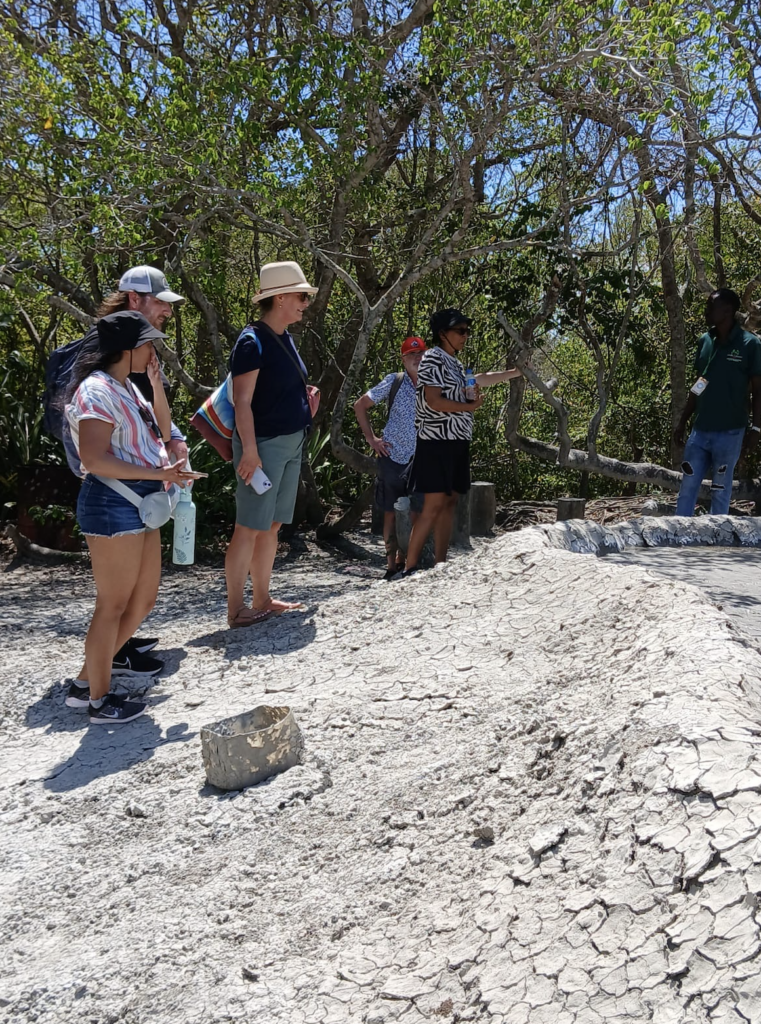
Last month I visited the Los Iros mud “volcano” in southern Trinidad a few days after a trip to the Island’s fragrant La Brea pitch lake, the oily subject of my first Trini piece. Los Iros sits in a small clearing in some woods; a pavement of hardened mud close to a rocky beach reached by a very steep path. There’s a shallow cone of dried mud on one side of the clearing which holds a roundish mud pond at its top, quietly bubbling away to itself. Every so often it overflows, spilling small rivers of mud which rapidly solidify in the tropical heat to form the cone although sadly we weren’t there to witness an eruption.
There’s Lots of Them & Sometimes They Go Boom
All told, there are over 1,100 known mud volcanoes around the world. Trinidad has 18 of them, mostly in the south of the main Island, while poor little nearby Tobago has none. They tend to form where methane gas is vented along geological structures that cut sedimentary rocks and hold a decent amount of ground water to form the mud. So, it makes geological sense that they should occur in regions like Trinidad which have a lot of hydrocarbon deposits.
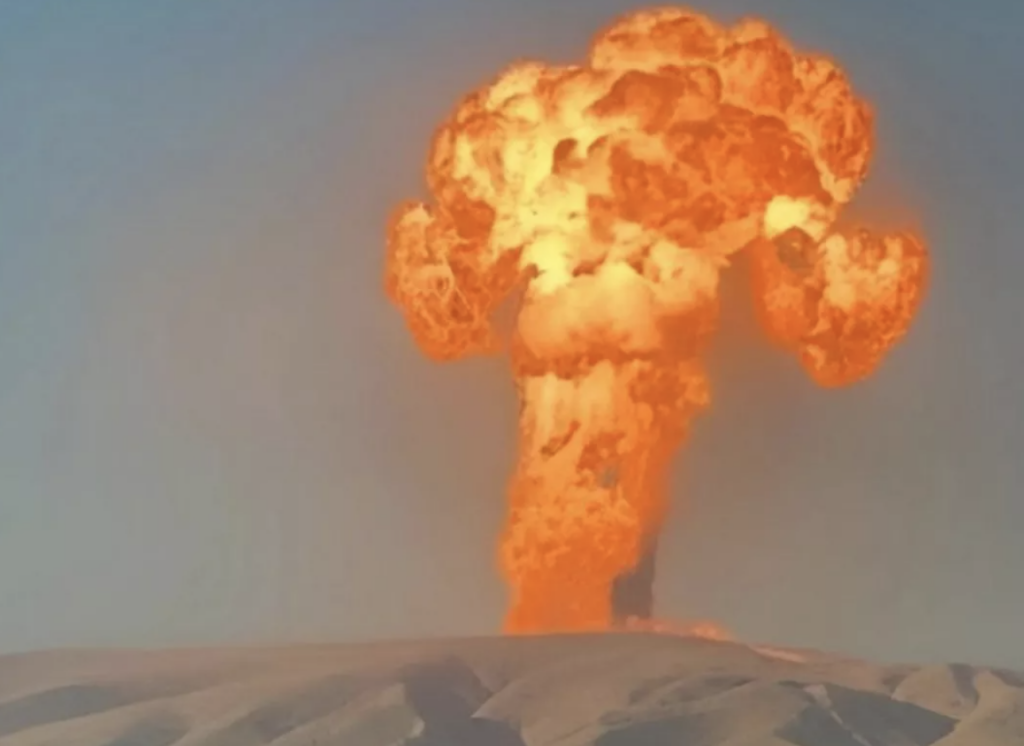
For reasons best known to Mother Nature, the country of Azerbaijan has more than 400 of the world’s active mud volcanoes. The biggest, fartiest ones can explode violently if the large volume of methane gas they emit is inadvertently sparked. In this rather strange YouTube video the narrator – speaking in a bizarre, heavily accented nasal voice – describes a 1,000ft high fireball that deposited mud over a 34 acre area (138 hectares).
Man-made mud eruptions can also happen. Allegedly. There was a nasty one in Indonesia back in 2006 called Sidoarjo which is thought to have been caused by an oil drilling rig (but everyone involved denied liability funny enough), which has become the biggest in the world. At its peak, the Sidoarjo vent was spewing out 180,000 stodgy cubic meters per day and went on to bury 10 square kilometres under 20-30m of mud.
Hello, I’m Nigel
Getting to Los Iros from our home base in Claxton Bay was my first experience of driving in Trinidad: a slightly nervy return to the left-hand side of the road which became an engrossing game of dodge the pothole as we moved to the country roads. My friend Michael, who was leading the way, turned off down an unmarked, rutted road and after five minutes we parked up before our suspension was irreversibly fucked. From there, we had a pleasant 20-minute walk along a jungly road watching tropical butterflies and listening to the local birds whooping and squawking in the trees all around us.
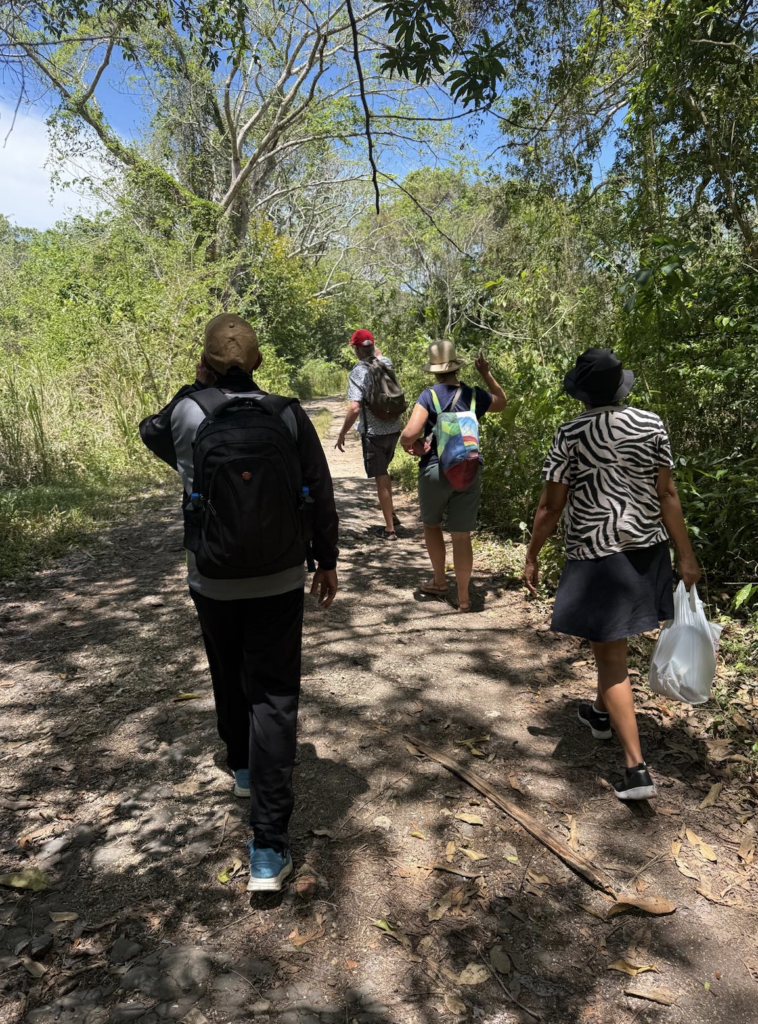
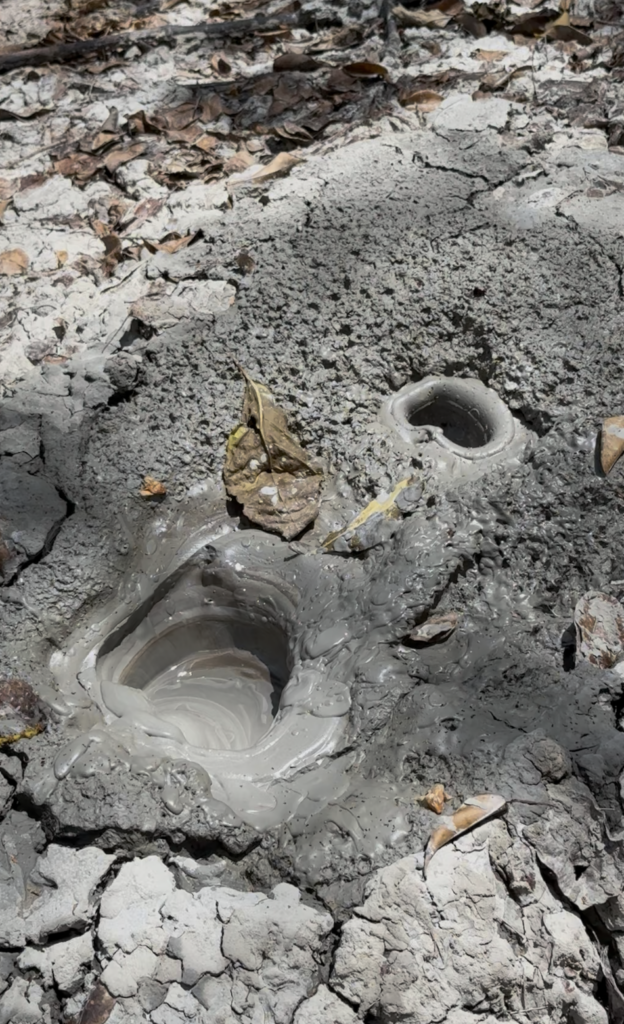
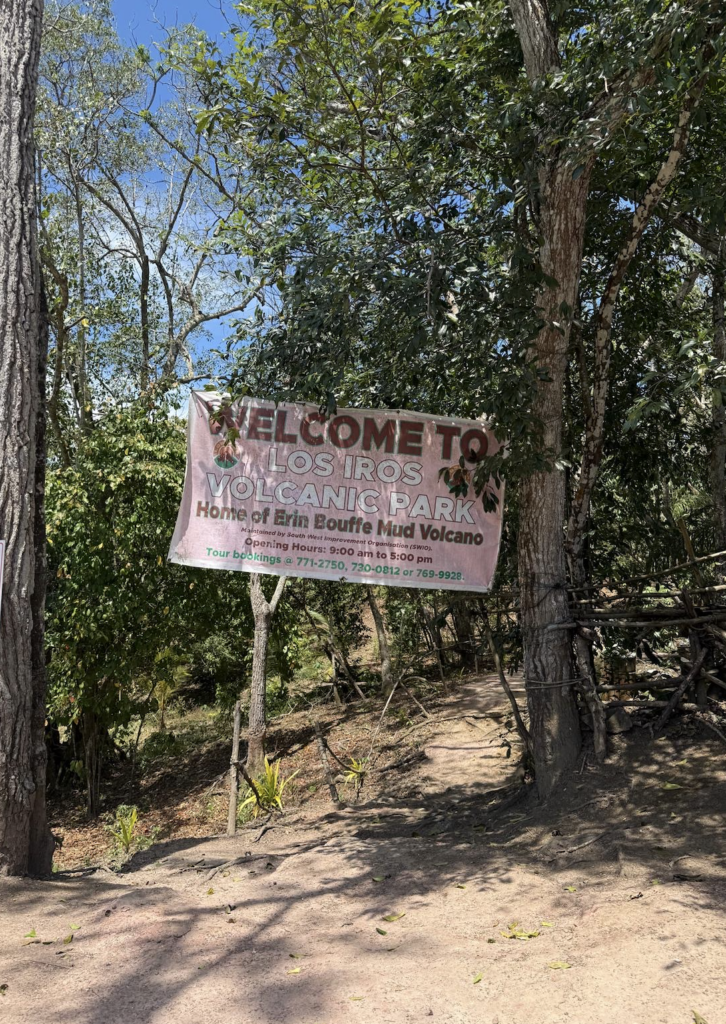
Finally, we came across a gangly local man leaning against a tree. He was stuffing down a fly-encrusted plate of chicken and rice, gamely puffing on a limp, cheap-looking smoke. Hanging in the trees next to him, over a small path, was a tatty sign that read “Welcome to Los Iros Volcanic Park. Home of Erin Bouff* Mud Volcano”. He smiled and introduced himself in a thick Trini accent as Nigel, and he’d be our guide for the next couple of hours (There’s something weirdly reassuring about a guide called Nigel.) Nigel walked us along a short, garbage strewn path, past a couple of tiny, bubbling muddy potholes, to the main clearing. *I tried to find out who Erin Bouffe was and why their name was given to a large puddle of slime but alas, nothing popped up on the interwebpipes.
“This is it” said Nigel, pointing at the main mud pool. “Oh, and don’t touch the trees.“
The Apples of Death
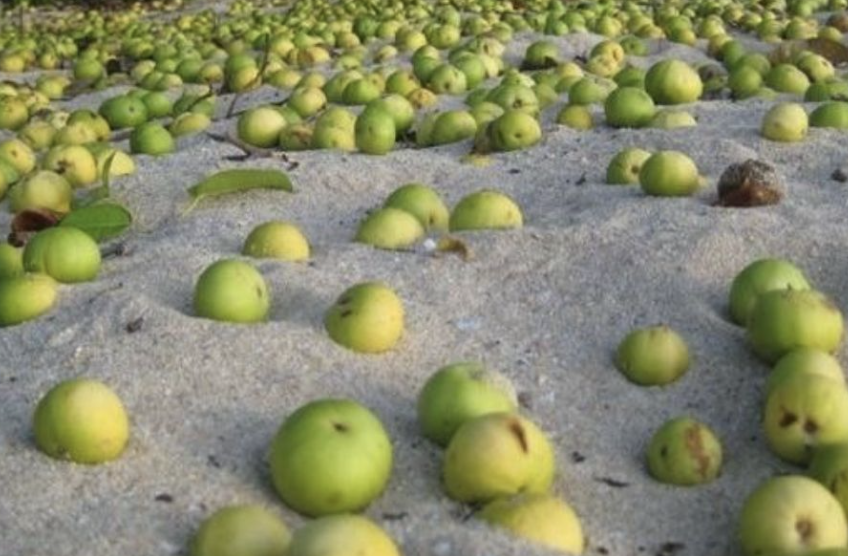
I was a bit put off by that last statement and was turning around to ask the obvious question when Nigel cheerfully told us that most of the trees surrounding the pool were Manchineel trees; the wonderfully nick named “tree of death”. This tree is so violently poisonous that the government has posted bright red signs warning of festering boils, organ failure and slow lingering death wherever they grow in close proximity to tourist sites.
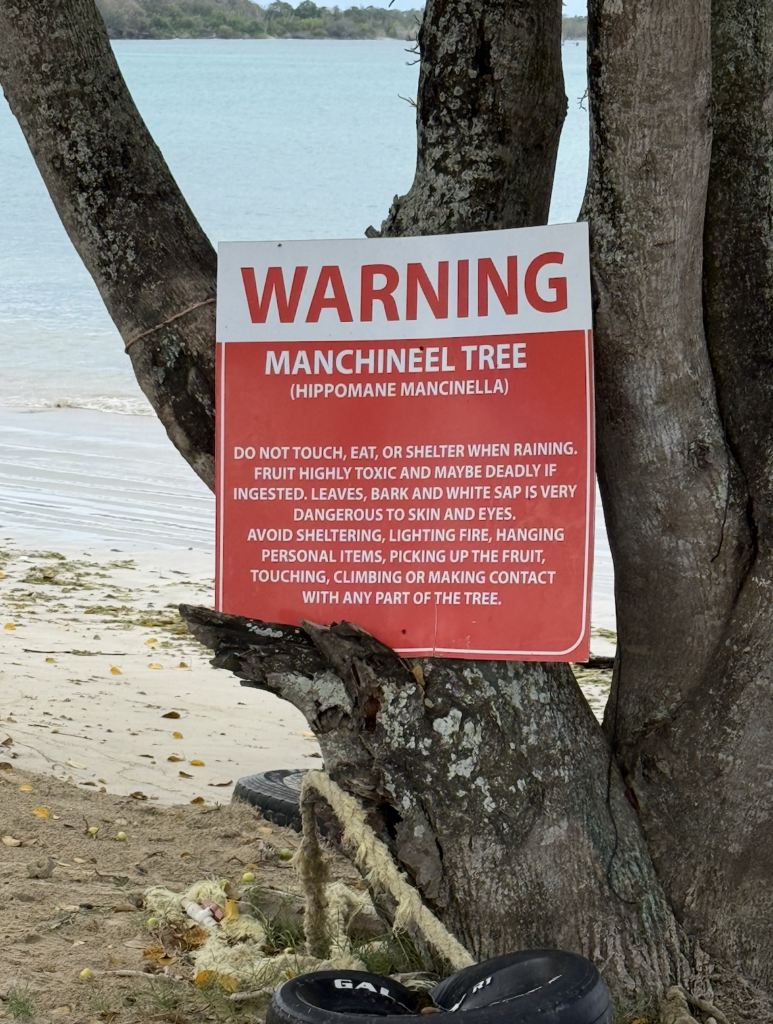
They bear a round, green fruit which also has its own nick name (“the little apple of death”) and looks very benign, even tasty, but is deadly enough that you can’t touch them, eat them, look at or even think about them so I was a tad concerned to see lots of the bloody things floating merrily about on the surface of the mud pool. The local folk (the ones that are still alive) know to leave them alone. The Wikipedia entry for the Manchineel contains the wonderful description;
“Its milky white sap produces strong allergic contact dermatitis. Standing beneath the tree during rain will cause blistering of the skin from mere contact with this liquid: even a small drop of rain with the sap in it will cause the skin to blister. Burning the tree may cause ocular injuries if the smoke reaches the eyes. Contact with its milky sap (latex) produces bullous dermatitis, acute keratoconjunctivitis and possibly large corneal epithelial defects.
Although the fruit is potentially fatal if eaten, no such occurrences have been reported in modern literature. Ingestion can produce severe gastroenteritis with bleeding, shock, and bacterial superinfection, as well as the potential for airway compromise due to edema.”
Interestingly the entry also contains a description of what they taste like and how the toxic effects take hold which is too good not to share. You have been warned.
When ingested, the fruit is reportedly “pleasantly sweet” at first, with a subsequent “strange peppery feeling … gradually progress[ing] to a burning, tearing sensation and tightness of the throat.” Symptoms continue to worsen until the patient can “barely swallow solid food because of the excruciating pain and the feeling of a huge obstructing pharyngeal lump.”
Yay. We’re Still Alive!
Past visitors had thrown a variety of sticks and small logs into the mud to… er… see if they float in mud. Nigel warned us that someone had also chucked in a large piece of jagged scrap metal at one spot, godbless’em, which the locals hadn’t been able to retrieve yet, so if the death apples didn’t poison us, we’d be impaled on the sunken scrap metal and bleed to death. We were the only people there which suited me fine given the flabby white state of my 63-year-old beach bod, and we all stripped down to bathing suits, climbed into the mud and bobbed around gamely for 45 minutes trying not to get the silty gunk in our eyes.
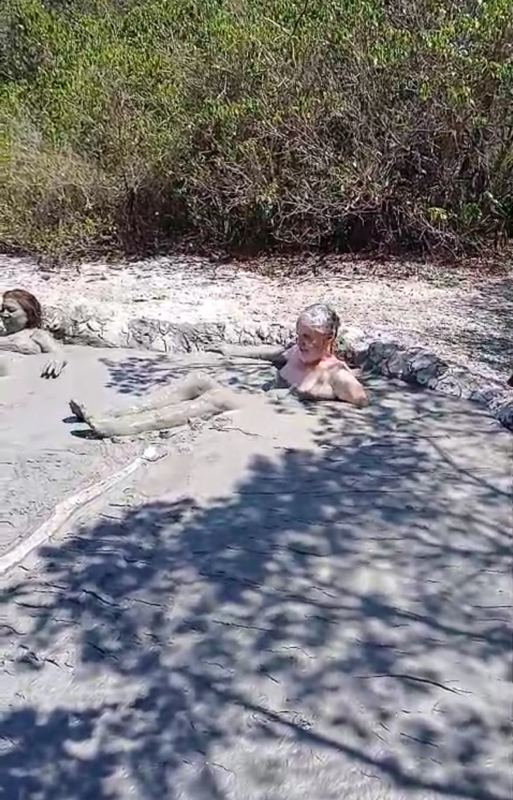
The real fun starts when you’re done bathing (if you can call it bathing.) It’s impossible to exit the pool with dignity because a) you’re incredibly slimy; b) you’re so buoyant and sit so high in the mud that it’s hard to keep from over balancing and flopping around like a drunken ditch pig, and c) you weigh 30lbs more than when you went in.
I dragged myself over the lip of the pond, 190lbs of deadweight meat slathered in pounds of natural lubricant and managed to haul myself up on to my feet on the slope of the cone. I immediately started sliding down the side toward the warm arms of a fruit-laden Manchineel tree. To make matters worse, there’s nothing to wash the mud off with other than the nearby sea which is a hazardous 20-minute walk down a very steep path. Nigel mentioned that there used to be a water truck parked nearby where muddy visitors could wash off but it wasn’t there anymore. Thanks Nigel.
Terracotta Tourists
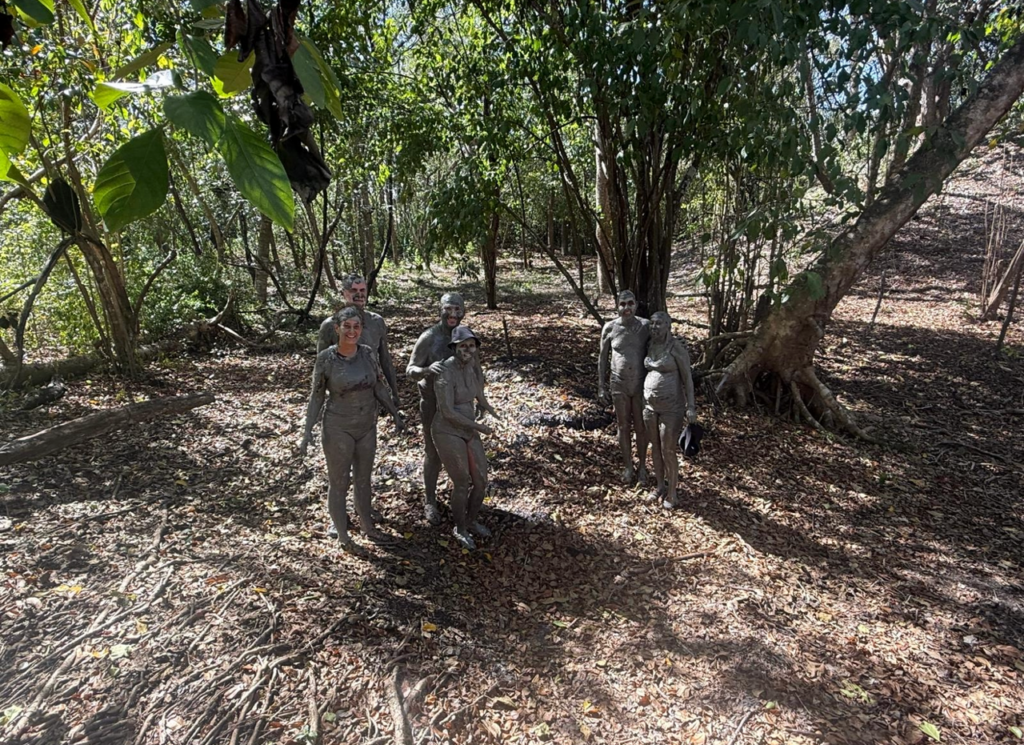
Emerging into the sun, the mud starts to harden into a pale brown, full-body ceramic casing. So much clay was stuck to my feet that my sandals wisely decided they’d had enough for one day and stopped behaving like footwear should behave which turned the beach path into a life-or-death challenge. If my sandals weren’t sliding off my feet, my feet were sliding out of the sandals threatening a broken ankle.
Your instinct is to reach out and grab nearby branches to stop yourself falling face first down the slope but the first time I tried that Nigel yelled at me to STOP DON’T GRAB THAT BRANCH. The trunk I was reaching for was covered in tiny needle spikes -no doubt poisonous- leaving me with 2 options: a broken limb or impalement.
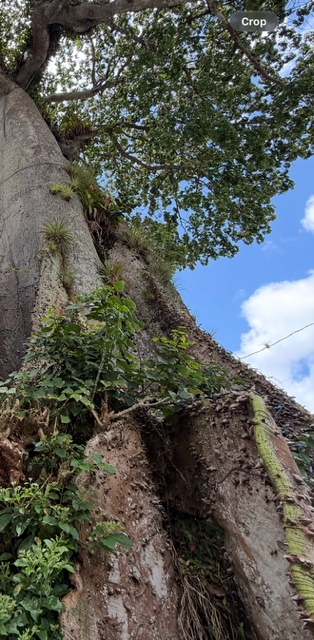
It took a while, but we all made it to the beach without broken bones. The tide was in and waves were crashing on the rocky foreshore as we gamely wobbled around on the cobbles taking turns to wash down using sea water and a discarded plastic milk jug. By the time we got back to the clearing, soaking wet with some last traces of persistent mud, another group had arrived. They’d brought their kids with them, and they were happily sliding down the side of the cone in a makeshift mud slide. Hopefully they weren’t tempted by the apples.
Happy to see that you’re writing again!
I love it Ralph
Very descriptive and creative
Lots of fun and adventure in beautiful T&T
Now that is a seriously weird story mate. How did you find the joint? I’ve been “swimming” in a mud bath once before, but it was a man made mud bath I think in the far northern suburbs of Sydney, and devoid of nasty apples. It was fun.